Table of Contents: [ ]
- How to log in to 192.168.0.1
- What is 192.168.0.1?
- Which routers use 192.168.0.1?
- Where do I find the router username and password?
- What can you change after logging in?
- How to change your WiFi password at 192.168.0.1
- How to change the WiFi network name
- Why won't 192.168.0.1 open?
- 192.168.0.1 opens but the password doesn't work
- Is 192.168.0.1 the same as your public IP address?
- Is it safe to change settings at 192.168.0.1?
- 192.168.0.1 login summary
Connect to your router's network, then open 192.168.0.1 in your browser to access the local admin page. This address works only if your router is configured to use 192.168.0.1.
How to log in to 192.168.0.1
You can access 192.168.0.1 from a phone, computer or tablet connected to the router's local network. You do not normally need an active internet connection, but you must be connected to the router by WiFi or Ethernet.
- Connect your device to the router's WiFi network or to one of its LAN ports.
- Open a web browser such as Chrome, Edge, Firefox or Safari.
- Type 192.168.0.1 directly into the browser's address bar and press Enter.
- When the router login page appears, enter the administrator credentials for your device.
- After signing in, use the router interface to manage the settings you need.
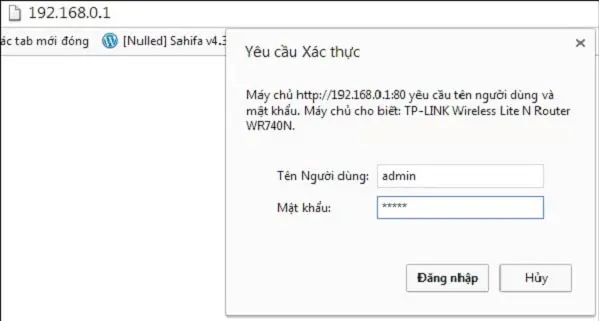
The exact login screen and available settings depend on the router manufacturer, model and firmware version.
What is 192.168.0.1?
192.168.0.1 is a private IPv4 address. It belongs to the 192.168.0.0/16 private address block reserved for use inside local networks.
A router can use 192.168.0.1 as its LAN address and default gateway. Devices connected to that router may then use it to communicate with the router and reach networks outside the local LAN.
Because it is a private address, 192.168.0.1 is not intended to identify your home router on the public internet. The router normally has a separate WAN or public-facing address for external connectivity.
Which routers use 192.168.0.1?
192.168.0.1 has been used as a default management address by various router and modem manufacturers. However, the address is not tied to a single brand and should not be assumed to work on every router.
Your device may instead use another local address, such as 192.168.1.1 or a manufacturer-specific hostname. The most reliable way to confirm the correct address is to check the router label, its documentation or the default gateway shown by your connected device.
Where do I find the router username and password?
The router administrator password is not necessarily the same as your WiFi password. Depending on the model, the admin credentials may be printed on a label on the router, supplied by your internet provider or created during the initial setup.
Do not assume that every router uses admin/admin. Some older devices used common default credentials, while many newer routers use unique passwords or require you to create an administrator password during setup.
If the credentials printed on the router no longer work, they may have been changed previously. Check the manufacturer's documentation before considering a factory reset.
What can you change after logging in?
The options available at 192.168.0.1 vary by router, but the administration interface commonly provides access to settings such as:
- WiFi network name (SSID);
- WiFi password and wireless security;
- 2.4 GHz and 5 GHz wireless settings;
- guest networks;
- connected devices;
- LAN and DHCP settings;
- DNS settings;
- parental controls;
- port forwarding;
- router firmware and security settings.
Advanced settings such as WAN, DHCP, DNS and routing can affect internet or local network connectivity. Record the existing configuration before changing settings you may need to restore later.
How to change your WiFi password at 192.168.0.1
The menu names differ between manufacturers, but the process is generally similar:
- Open 192.168.0.1 and sign in to the router.
- Look for a section named Wireless, WiFi or WLAN.
- Open the wireless security or password settings.
- Enter the new WiFi password.
- Save or apply the change.
After the change is applied, wireless devices may disconnect from the network. Reconnect them using the new password.
How to change the WiFi network name
The WiFi network name is usually shown as SSID in the router interface. Open the Wireless, WiFi or WLAN section, locate the SSID field, enter the new network name and save the configuration.
If the router broadcasts separate 2.4 GHz and 5 GHz networks, it may provide a separate SSID for each band.
Why won't 192.168.0.1 open?
If the browser displays an error, keeps loading or cannot reach the page, the problem does not necessarily mean that the router is offline. Check the local connection and router address first.
Make sure you entered the address correctly
Enter 192.168.0.1 in the address bar. Common mistakes include replacing the number 0 with the letter o, replacing 1 with the letter l, or entering additional numbers.
You can also explicitly enter:
http://192.168.0.1
Check your connection to the router
Your device should be connected to the router whose administration page you want to open. If you are using a phone, temporarily disabling mobile data can help ensure that the browser is using the local WiFi connection.
Check the router's actual gateway address
Not every router uses 192.168.0.1. If your network uses a different gateway, entering this address will not open the correct administration page.
On Windows, open Command Prompt and run:
ipconfigFind the active network adapter and look for Default Gateway. The address shown there is usually the router's local IP address.
On phones and other operating systems, the router or gateway address can usually be found in the details of the currently connected WiFi network.
Try another browser or reconnect to the network
If the gateway is correct but the page still does not load, reconnect to WiFi, try another browser or restart the router if appropriate. Avoid performing a factory reset solely because the admin page does not open.
192.168.0.1 opens but the password doesn't work
If the login page appears, the IP address is reachable and the remaining issue is usually authentication. Check the router label and documentation for the correct administrator credentials.
If someone previously changed the administrator password, the original credentials will no longer work. A factory reset may restore the default configuration on many routers, but it can also erase WiFi, internet and other customized settings.
Before resetting a router supplied by an internet service provider, check whether additional connection settings or provider credentials will be required afterward.
Is 192.168.0.1 the same as your public IP address?
No. 192.168.0.1 is used inside a private network and is not your public internet address.
The private IPv4 ranges defined for local network use are:
- 10.0.0.0/8 — 10.0.0.0 through 10.255.255.255;
- 172.16.0.0/12 — 172.16.0.0 through 172.31.255.255;
- 192.168.0.0/16 — 192.168.0.0 through 192.168.255.255.
This is why the same address, including 192.168.0.1, can be used independently inside many different home and office networks.
Is it safe to change settings at 192.168.0.1?
Accessing your own router administration page is a normal part of managing a local network. Before changing advanced settings, however, make a note or backup of the current configuration if your router provides that option.
For better security, use a strong WiFi password, keep the router firmware updated when supported, and use a unique administrator password rather than leaving known default credentials enabled.
192.168.0.1 login summary
If your router uses 192.168.0.1, connect to its local network and enter the address directly in your browser to reach the admin page. From there you can manage WiFi and other network settings. If the page does not open, verify the address and check your device's default gateway before changing or resetting the router.
FAQ
Do I need internet access to open 192.168.0.1?
Usually no. 192.168.0.1 is a local address, so you normally only need to be connected to the router by WiFi or Ethernet. An active internet connection is not required to access the router's local admin page.
Why does 192.168.0.1 take me to a login page?
If your router uses 192.168.0.1 as its management address, the web server built into the router displays an authentication page before allowing access to its settings.
Is the 192.168.0.1 admin password the same as my WiFi password?
Not necessarily. The router administrator password controls access to the management interface, while the WiFi password is used by devices joining the wireless network. Some routers use separate credentials for each.
Why does Google search for 192.168.0.1 instead of opening my router?
The address may have been entered into a search field instead of the browser address bar. Type 192.168.0.1 directly into the address bar, or enter http://192.168.0.1.
Can two routers use 192.168.0.1?
Yes, separate private networks can each use 192.168.0.1. Two routers on the same LAN should not normally use the same IP address because that can create an address conflict.
Why does my browser say the connection to 192.168.0.1 is not private?
Some router administration interfaces use a local HTTPS certificate that the browser cannot verify in the same way as a public website certificate. Confirm that you are connected to your own router and that the address is correct before proceeding.
Can I access 192.168.0.1 from my phone?
Yes. Connect the phone to the router's WiFi network and enter 192.168.0.1 in the browser address bar. The router must actually use that address for its management interface.
What happens if I reset my router?
A factory reset can erase customized settings such as the WiFi name, WiFi password and other network configuration. The exact behavior depends on the router, so check the manufacturer's instructions before resetting it.
 English
  French
  German
  Indonesian
  Italian
  Japanese
  Polish
  Portuguese
  Russian
  Spanish
  Turkish
  Ukrainian
  Vietnamese
  Arabic
  Netherlands
  Thai
Thai  Chinese
  Taiwan
  Korean
  Swedish